
The Four Levels of Conflict
Why most change initiatives fail—and how to dig to the root causes that actually matter.
By Edwin Miller | Executive Chairman, TheGreyMatter.ai
| THE LEADERSHIP SERIES Part 1: The Five Marks of a Great Leader Part 2: The Strategic Mind: Long-Term Thinking Part 3: The Acquisition Discipline Part 4: The Four Levels of Conflict ← You are here Part 5: The Complete Leader |
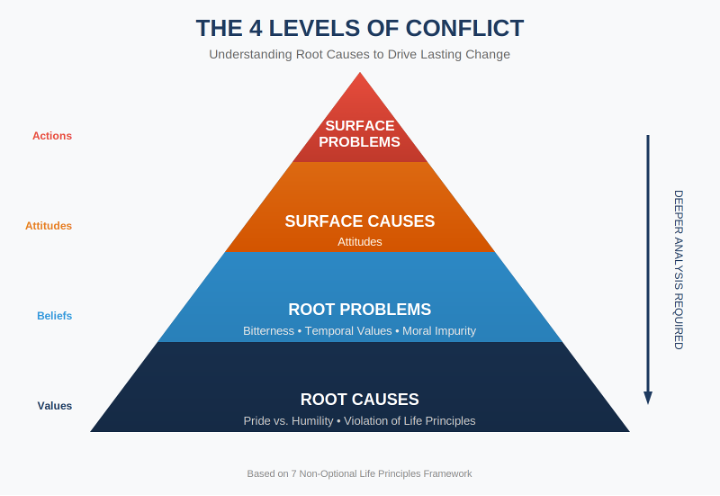
Perhaps the most powerful diagnostic framework for organizational leadership comes from understanding the four levels at which problems manifest. This framework, developed by Stephen Herring as part of his “7 Non-Optional Life Principles” teaching, reveals why most leaders spend their careers treating symptoms while transformational leaders dig to root causes.
Level 1: Surface Problems (Actions)
At the surface, we see problems manifesting as actions—missed deadlines, poor performance, conflicts between team members. Many leaders stop here, addressing symptoms through policy changes or personnel decisions. But these interventions rarely create lasting change.
Level 2: Surface Causes (Attitudes)
One level deeper, surface causes emerge as attitudes—the mindsets and dispositions that drive behavior. Cynicism, entitlement, or fear can poison organizations, but even addressing attitudes doesn’t solve the fundamental problem.
Level 3: Root Problems
At the root problem level, Herring identifies three interconnected issues: bitterness from past grievances, temporal values that prioritize short-term gains, and moral impurity in decision-making processes. These create the fertile ground for organizational dysfunction.
Level 4: Root Causes
Finally, at the deepest level, we find the root causes: pride versus humility and violation of core life principles. This framework explains why organizational change initiatives so often fail—they address symptoms while leaving root causes untouched. True transformation requires the courage to dig deep and the wisdom to address what we find.
| SOURCE: Herring, Stephen. “7 Non-Optional Life Principles.” Training Faithful Men, 2001. |
| KEY TAKEAWAY: Most organizational problems have deeper causes than their surface symptoms suggest. The discipline to diagnose at all four levels—before prescribing solutions—separates transformational change from expensive reshuffling. |
| Ready to transform your organization? Discover how TheGreyMatter.ai operationalizes these principles with 37+ agentic AI agents. thegreymatter.ai |
Next in this series: The Complete Leader: Integrating Competencies